|
1. Scaffold oriented synthesis (SOS): This research theme focused on the design and synthesis of various small molecular multifunctional scaffolds which will lead us to natural product and related molecules after biocatalytic and chemical modification. These libraries are mainly based on core scaffold from individual natural products or specific substructures found across a class of natural products or a new chemotype together. The following hydroxymethylated cycloalkenone based scaffolds have been designed, synthesized and further synthetically elaborated to many natural products and related molecules.
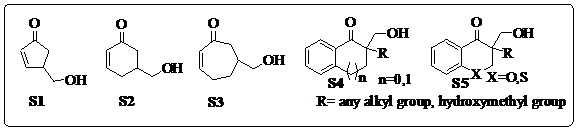
Hydroxymethylated cycloalkenones based core scaffolds
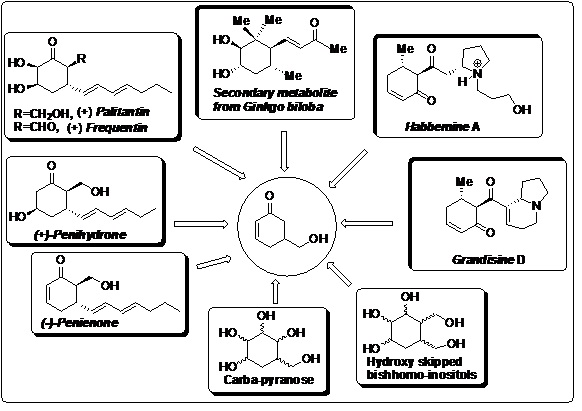
5-Hydroxymethyl -cyclohex-2-enone related natural products and related molecules
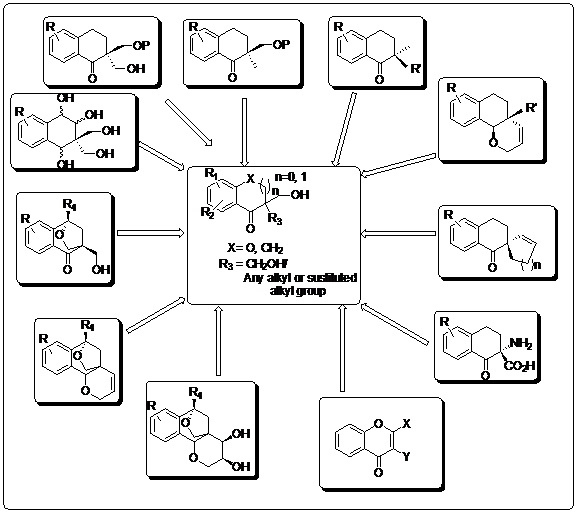
Hydroxymethyl tetralone (chromanone/indanone) related natural products and related molecules
2. Synthetic studies towards small ring macrolides: The main highlight of this part of the research is the synthetic studies directed towards total synthesis of naturally occurring small ring macrolides. The main highlight of our synthetic strategy is chemoenzymatic kinetic resolution coupled with Mitsunobu inversion and chemoenzymatic dynamic kinetic resolution to access some valuable chiral secondary alcohol intermediates. These intermediates are then employed successively to gain access of more advanced intermediates, which has close resemblance of the target molecule. In the final step of synthesis we often planned to adopt RCM reaction by Grubbs catalyst as well as Yamaguchhi macrolactonization protocol. The success of our synthetic strategy depends on the optimization of Grubbs RCM method and Yamaguchhi macrolactonization protocol.
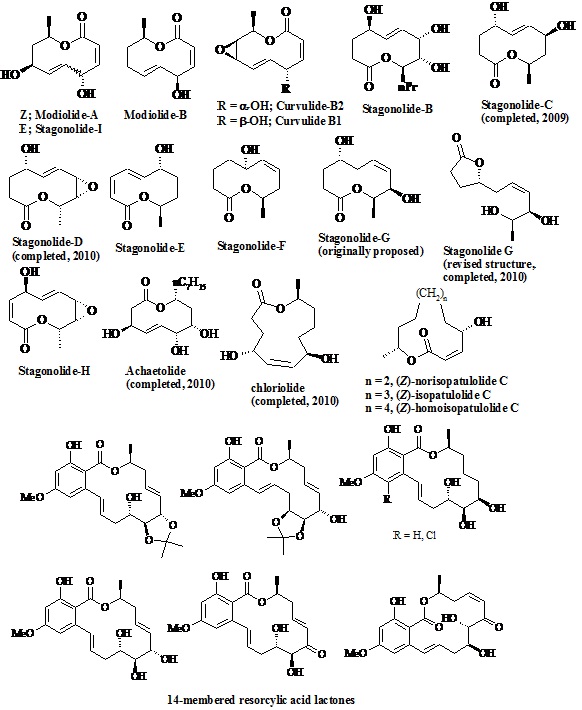
Small ring macrolides as synthetic targets
3. Enzymatic synthesis of useful chiral building blocks: Biocatalysis using enzymes play a pivotal role in the area of asymmetric organic synthesis for the production of numerous biologically active natural products, APIs, food ingredients, flavor chemicals and so on. And demand for the above process is (white biotechnology, the industrial application of biocatalysis) continuously increasing with the advancement of microbiology and molecular biological tools that allowed the researchers to produce a suitable biocatalyst in large excess within a short span of time.
3.1. Biocatalysis with ketoreductases: 2-Substituted-β-ketoesters act as very good substrates for several ketoreductase enzymes, and numerous reports are well known in the literature which demonstrates the successful application of those class of enzymes to yield β-hydroxy ketoesters in stereocontrolled way. As the substrate spectrum of the ketoreductase from Klebsiella pneumoniae have not explored at all, we have set our target to use different 2-substituted β-ketoesters as potential substrates for the enzyme to synthesize several β-hydroxy ketoesters in enantiopure fashion. At a later stage we intend to use the enzymatically synthesized β-hydroxy ketoesters for effective construction of many useful molecules such as oxetanes, β-lactones, carbohydrate mimic, functionalized cyclopentane and cyclohexane frameworks
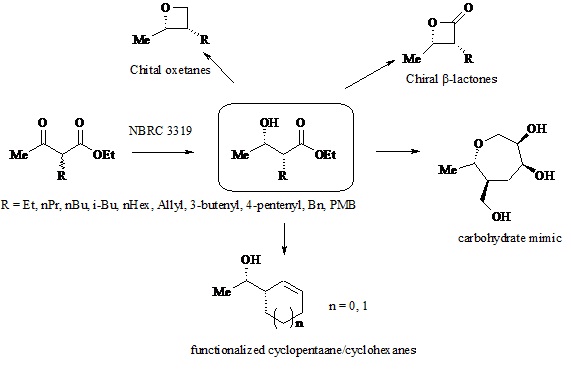
Klebsiella pneumoniae (NBRC 3319) mediated synthesis of various 2-substitited-β-hydroxyketoesters and further synthetic manipulation
3.2. Biocatalysis with HNLs: We have been successful in finding new cyanogenic plants from the northern teritory of India. The geographic location and climatic condition of Himachalpradesh is suitable for growing many edible stone fruits. We have mainly focused our attention on fruits from Rosaceae family (Genus: Prunus). The collected fruits are peach (Prunus persica), Himalayan wild cherry (Prunus avium), Red Indian plum (Prunus domestica), Himalayan plum (Prunus americana), apricot (Prunus armeniaca) and shakarpara (white apricot, a hybrid cultivar of normal apricot found in Nepal and India). All the six newly found HNLs are R-selective, i.e., they yield R-mandelonitrile from benzaldehyde by Si-facial attack of the cyanide anion. The enantioselectivity obtained for the formation of mandelonitriles by all the six HNLs are in the range of 60-93%. The best results are obtained with PavHNL and ParsHNL (both provide 93% ee), where as PpHNL is the least enantioselective (provides 60% ee for R-mandelonitrile formation). The main object of the project proposal will be the development of efficient biocatalytic route for various value added products such as Pregablin, Baclofen and Pril drugs.
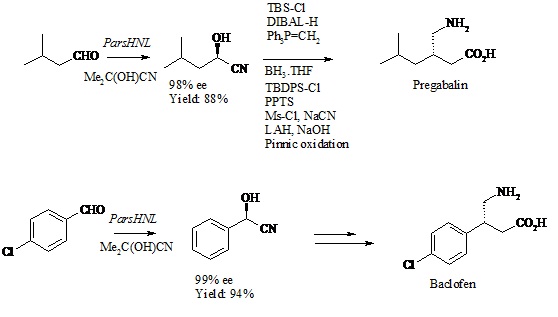
Biocatalytic route for pregabalin and baclofen |



