Research Interests
With an initial research foundation in Protein Structure Analysis, a major initiative in experimental studies on Proteins has been very successfully initiated with the set up of a well-equipped laboratory. Research from the laboratory has been published in Proteins, Journal of Medicinal Chemistry, Journal of Physical Chemistry, Bioorganic and Medicinal Chemistry as well as Journal of Inorganic Biochemistry, to name a few, which truly reflects the versatility.
Protein aggregation studies: Research in this field encompasses the study of the specific binding properties of proteins with small molecules to identify potential ligands that play an important role in the aggregation process. Aggregation studies currently underway are involving human serum albumin, lysozyme and ribonuclelase A. Recently we have established that Cu(II) plays a vital role in the enhancement of fibrillation in human serum albumin [J. Phys. Chem. B114, 10228-10233 (2010)].
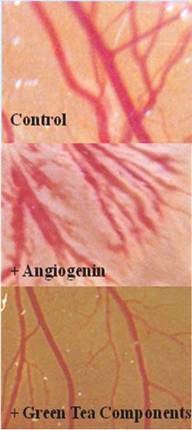
Protein ligand binding: Studies involve theinteractions of the polyphenolspresent in greentea with proteins. Novel studies with angiogenin indicated that the process of angiogenesis, thecapacity to form blood vessels, was inhibited by polyphenols present in green tea. Angiogenin, a potent inducer of blood vessel formation, is a member of the ribonuclease superfamily with unusual biological properties in addition to its ribonucleolytic activity. This study was further extended to Ribonuclease A as the model system to study the properties relating to the activity of the polyphenols. We have found that the polyphenols behave as noncompetitive inhibitors of the protein [Proteins69, 566-580 (2007)]. Green tea extracts, which have a marked antioxidant effect, contain the polyphenols (-)-epicatechin (EC), (-)-epicatechin gallate (ECG), (-)-epigallocatechin (EGC), and (-)-epigallocatechin gallate (EGCG). The studies indicated that the gallate containing moieties were more potent inhibitors of the protein. This led to consider their chelating properties with Cu, a known inducer of angiogenesis. It was found that the copper complexes formed with the two gallate containing polyphenols were actually better inhibitors of the ribonucleolytic activity than the polyphenols themselves [FEBS Lett. 580,4703-4708 (2006)]. This study is currently being extended to angiogenin.
The interaction of EGCG with the most abundant carrier protein, human serum albumin (HSA) has been investigated in her laboratory for the first time [Proteins 64, 355-362 (2006)]. Further work is currently in progress on the interactions of dietary polyphenols with HSA. These include the interaction of some specific derivatives of curcumin with HSA [Biopolymers 91, 108-119 (2009)] and RNase A as well as with calf thymus DNA. The curcumin derivatives were found to be minor groove binders of ct-DNA whereas the Cu-complexes of the gallate containing polyphenols in green tea are intercalators [J. Inorg. Biochem., 102,1711-1718 (2008); Chem. Phys. 351,163-169 (2008) Intl. J. Biol. Macromol. 42, 14-21 (2008)].
Biophysical techniques used in the laboratory to investigate the protein ligand interactions include UV-Vis, Fluorescence, Circular Dichroism and FTIR. Protein ligand docking is also performed using AutoDock and FlexX from Sybyl (Tripos Inc, USA) available in her laboratory.
Protein isolation and characterization:The isolation and characterization of angiogenin from goat plasma has been accomplished for the first time. The design and development of natural and synthetic inhibitors of the protein is in progress to understand the functional implications of the enzymatic reactivity of angiogenin with regard to its physiological potential. Initial studies in the design of inhibitors has been with the model protein Ribonuclease A. Active collaborative research for the design of competitive inhibitors of Ribonuclease A has been very promising. This has opened up a new dimension in the inhibition studies of the protein and the crystal structure of a few of these synthetic inhibitors is currently in the Protein Data Bank. [J. Med. Chem. 52, 932-942 (2009)].
Protein Structure Analyses: An analysis of the non-regular regions of proteins and the nature of the turn in omega loops in a selective representative set of proteins from the Protein Data Bank have been reported in Proteins51, 591-606 (2003). This was further investigated by a look at non-regular regions of proteins in general [Biopolymers 79, 63–73 (2005)]. An investigation of the amino acid residues and their geometry as well as on helix linkers in proteins and the forbidden region of the Ramachandran plot is also in progress. A special mention may be made to an article related to protein–ligand docking that studied the effect of critical mutations in Ribonuclease A on protein-ligand binding [Biochem. Mol. Biol. Edu. 33, 335–343 (2005)]. This paper was highlighted in the Protein Data Bank newsletter of Summer 2008, Number 38 in the Education Corner Feature article entitled: Biochemistry and Molecular Biology Education (BAMBED), a Journal for University, College, and High School Educators by Judith G. Voet and Donald H. Voet, BAMBED Co-Editors-in-Chief.
A number of joint projects exist with faculty members of the Institute both inside and outside the Department. Ongoing work with a faculty member of the Department has been highlighted in Nature India [doi:10.1038/nindia.2009.293].We also closely collaborate with other leading research groups in India and abroad in areas of mutual interests. Our major sponsors are Department of Science and Technology, India, Ministry of Human Resource Development, India, Council of Scientific and Industrial Research, India. Work is also in progress at Presidency College and Saha Institute of Nuclear Physics in Kolkata and with the University of the Balearic Islands, Spain and Structural & Chemical Biology Group, Institute of Organic and Pharmaceutical Chemistry, The National Hellenic Research Foundation in Athens, Greece.
|



