spalei@chem.iitkgp.ac.in
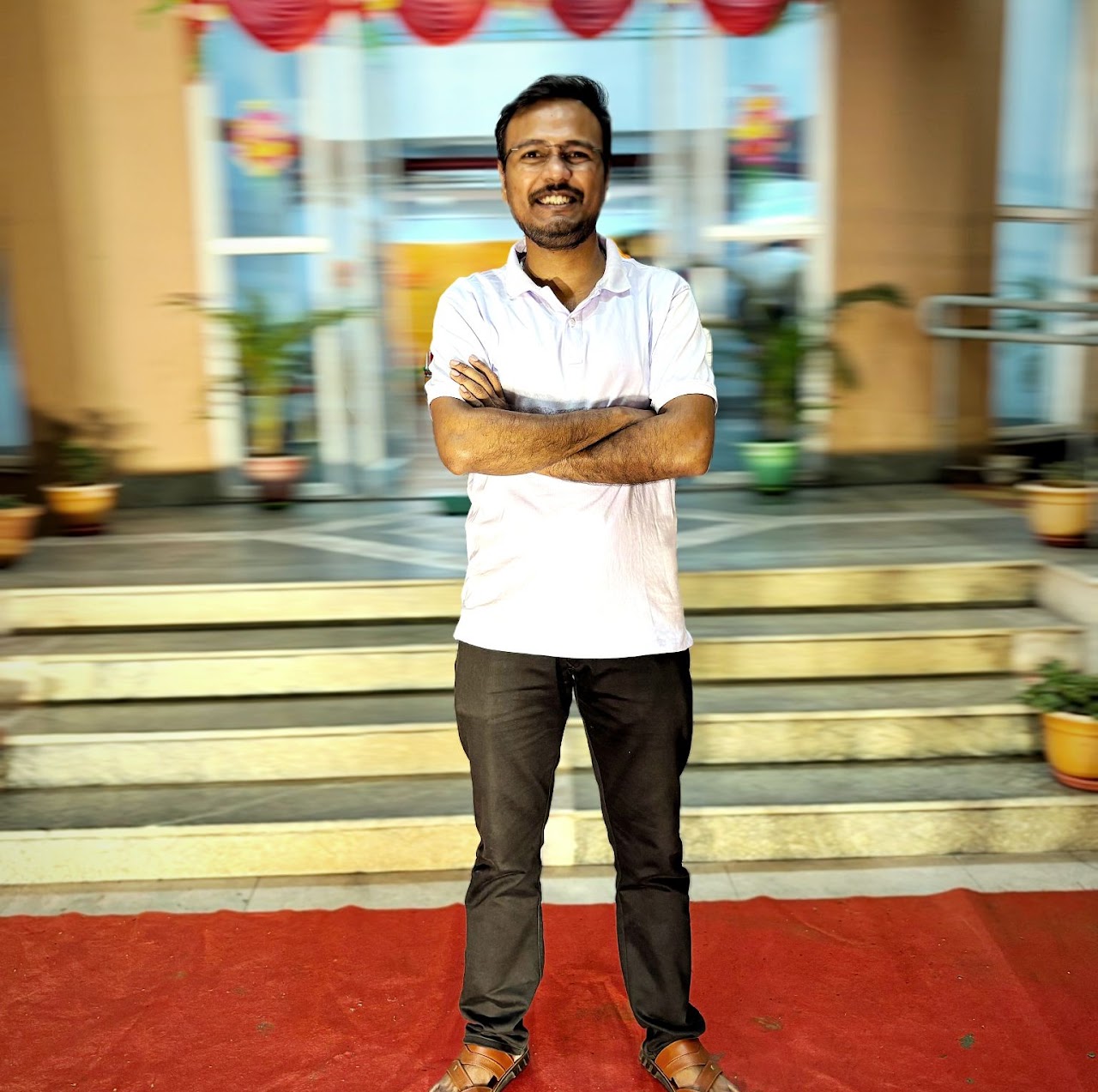
Dr. Shubhendu Palei Assistant Professor & Ramalingaswami Fellow Room HP-204, High Pressure Building Department of Chemistry Indian Institute of Technology (IIT) Kharagpur Kharagpur-721302 West Bengal, India
Our research focuses on developing chemical and synthetic biology tools for molecular level understanding of the histone code with implications in fundamental science and drug discovery. My group will develop cyclic peptide-based ligands to modulate specific epigenetic PTM states of histones both in vitro and in vivo. We aim to mimic the epigenetic modifications of histones e.g. methylation, acetylation, ubiquitination using genetic code expansion technique to understand the molecular basis of crosstalks and their roles in controlling the chromatin landscape. We aim to rescue the loss-of-function effect of oncohistone mutations by site specifically introducing specific PTM by genetic code expansion. We want to incorporate photocrosslinker AA in histones to study PTM readers and erasers.
Our research focuses on developing chemical and synthetic biology tools for molecular level understanding of the histone code with implications in fundamental science and drug discovery. My group will develop cyclic peptide-based ligands to modulate specific epigenetic PTM states of histones both in vitro and in vivo. We aim to mimic the epigenetic modifications of histones e.g. methylation, acetylation, ubiquitination using genetic code expansion technique to understand the molecular basis of crosstalks and their roles in controlling the chromatin landscape. We aim to rescue the loss-of-function effect of oncohistone mutations by site specifically introducing specific PTM by genetic code expansion. We want to incorporate photocrosslinker AA in histones to study PTM readers and erasers.
Awarded Ramalingaswami Re-entry Fellowship 2022-23 worth 83 lakhs INR by DBT, India for three years or up to five years (1.37 crores INR) to establish own research lab
ERC post-doctoral fellowship (1/2018-5/2021) at TU Dortmund and (10/2021-12/2022) at ETH Zürich.
Awarded EMBL Advanced Training Centre Corporate Partnership Programme Fellowship to attend EMBO Chemical Biology 2016 conference in Heidelberg, Germany
Best poster award in Muenster Conference for Biomolecule Analysis-2014 from Springer Nature
Awarded prestigious International Graduate School of Chemistry (GSC-MS), Muenster fellowship 2012-2014 from Ministry of Science and Education of the federal state of Northrhine Westphalia (NRW)
Best Poster award in Summer Undergraduate Research Grant for Excellence (SURGE), 2011, IIT Kanpur
Awarded prestigious Summer Undergraduate Research Grant for Excellence (SURGE), 2011 Fellowship, IIT Kanpur
Qualified CSIR NET-2011 in Junior Research Fellowship (JRF) category with all India rank 10 conducted by Council of Scientific and Industrial Research (CSIR), India
Qualified Graduate Aptitude Test for Engineering (GATE) 2012 conducted by IIT Delhi with all India rank 20 (percentile: 99.78)
Placed within top 3% (AIR 104) in Joint Admission Test to M.Sc.(JAM-2010) conducted by Indian Institute of Technology (IITs)
Awarded Best Student Award at P.S. College, Barsahi during 2004-2005
Awarded the Prestigious National Rural Talent Search Scholarship (NRTS) by State Government of Odisha from 1999 to 2003
No patents on record.